

Car AC problems can reduce cooling performance, create unpleasant odors, increase fuel consumption, and lead to expensive repairs if not addressed early. Common issues include weak airflow, refrigerant leaks, compressor failure, clogged filters, and unusual noises from the AC system. This article explains the most common car AC problems, their causes, warning signs, and the most effective repair solutions. It also covers preventive maintenance tips and professional repair options to help improve cooling efficiency and extend the lifespan of your vehicle’s air conditioning system. Whether your AC is blowing warm air or making strange sounds, understanding these problems helps you take the right action quickly.
Understanding How a Car AC System Works
Most people only think about the car AC when it stops cooling properly. One day the cabin feels icy within seconds, next day the air feels… tired. Not fully warm, not properly cold either. That usually means the AC system is struggling somewhere in the cycle.
Your car’s AC works by removing heat and humidity from inside the cabin, then pushing cooler air back through the vents. Several parts work together to make that happen, and if one starts slipping, the whole system feels off balance.
Key Components of a Car AC System
Compressor
The compressor keeps refrigerant circulating through the AC system. It’s constantly working in the background, especially during hot weather.
When it weakens, cooling becomes inconsistent. You might notice the air gets colder while driving, then fades during traffic stops. Some compressors also make a faint buzzing or clicking sound right after the AC starts. Easy to ignore at first honestly.
Condenser
The condenser releases heat collected from inside the cabin. Since it sits near the front grille, it catches dust, sand, and road debris all the time.
A dirty condenser restricts airflow, which means the AC has to work harder to cool the cabin. This becomes very noticeable during summer afternoons when the dashboard itself starts radiating heat.
Evaporator
The evaporator cools the air before it reaches the vents. It also removes moisture from the cabin air. If mold or dirt builds up here, the AC may produce a damp smell during startup. Sort of like humid fabric trapped in a closed room overnight.
Refrigerant Lines
These lines move refrigerant between AC components under pressure. Even a tiny leak can reduce cooling gradually. Most drivers notice weaker airflow over weeks, not instantly.
Cabin Air Filter
The cabin air filter blocks dust and fine particles from entering the interior. Once clogged, airflow feels restricted and the vents lose that strong cooling push people expect.
Why Regular AC Maintenance Matters
Regular AC servicing keeps cooling stable, improves airflow, and helps prevent compressor damage. Small issues like low refrigerant or blocked filters usually start quietly, then turn expensive later. That’s the annoying part. Early maintenance almost always costs less than major AC repair.
Common Car AC Problems Drivers Experience
Car AC problems rarely show up all at once. Usually it starts with something small. The cabin takes longer to cool. Airflow feels weaker during traffic. Or there’s a weird smell for a few seconds after startup that makes you wrinkle your nose a bit. These early signs matter. Ignoring them normally leads to bigger repair bills later.
Weak or Warm Airflow
This is probably the complaint most drivers notice first. The vents still push air, but the cooling feels lazy. Not properly cold anymore. Low refrigerant is a common reason behind it. Without enough refrigerant, the system can’t pull heat out effectively. A weak compressor can create the same issue because refrigerant stops circulating the way it should.
Sometimes the problem is simpler than people expect though. Dust and sand clogging the condenser can restrict cooling, especially in hotter areas. And dirty cabin filters? They quietly choke airflow little by little until the vents barely feel strong.
Unpleasant Smell From the AC
If the AC smells damp or musty when it starts, moisture buildup is usually the culprit. Mold and bacteria can grow around the evaporator when condensation stays trapped inside the system. The smell often hits strongest during the first minute after turning the AC on. Kind of stale. Like humid fabric left in a closed bag too long. A clogged cabin filter can make the odor worse because airflow becomes restricted and trapped moisture hangs around longer than it should.
Strange Noises While AC Is Running
Your AC shouldn’t sound rough. A healthy system stays fairly quiet besides normal fan noise. Clicking, rattling, squealing, or grinding sounds usually point toward worn components. Compressor bearings sometimes produce a low grinding noise before failure. Loose parts may vibrate behind the dashboard. Damaged AC belts often squeal during startup, especially in hot weather. And honestly, unusual sounds almost never fix themselves.
AC Refrigerant Leaks
Refrigerant leaks are more common than many drivers realize. Most leaks happen through aging seals, cracked hoses, or corroded AC fittings. The tricky part is how gradual it feels. Cooling slowly becomes weaker over weeks or months, so people keep delaying inspection. Some vehicles also show oily residue near AC lines where refrigerant escapes under pressure.
AC Stops Working Intermittently
This type of issue frustrates drivers the most because the AC works sometimes, then suddenly stops cooling without warning. Electrical faults are often behind it. Faulty sensors, weak relays, damaged wiring, or compressor clutch problems can interrupt the system randomly. You’ll notice it more during long drives when outside temperatures climb and the AC system is under heavier load.
How to Fix Car AC Problems Efficiently
Throwing refrigerant into the system without checking the actual fault? That’s where many AC repairs go sideways. Sometimes the issue is a tiny leak. Sometimes airflow is being blocked somewhere deep in the system. Proper inspection matters more than people realize.
Professional AC System Diagnosis
Good AC repair services starts with testing, not guessing.
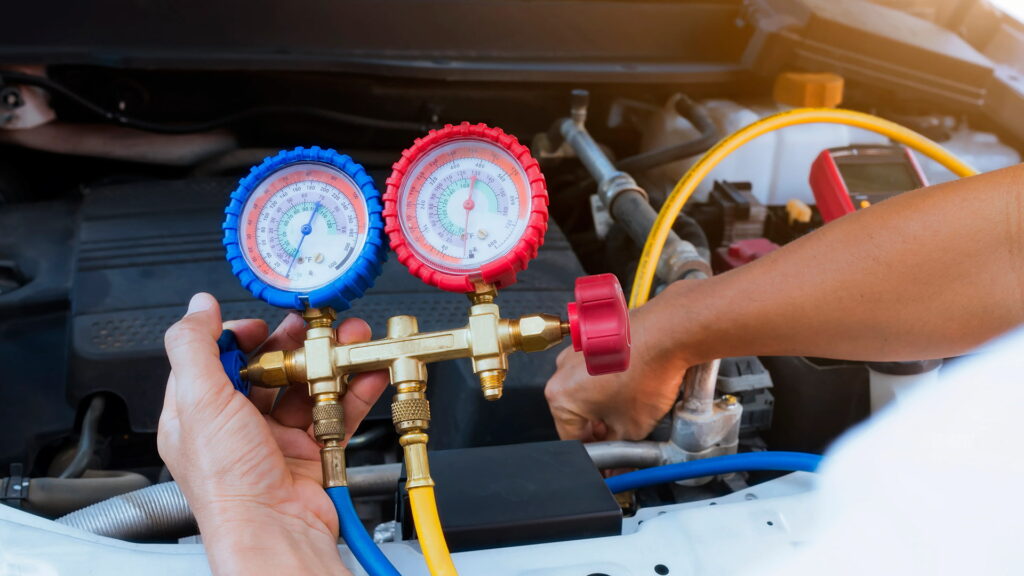
Technicians usually begin with pressure testing to see whether refrigerant is circulating correctly. If the pressure readings look unstable, there could be a leak, restriction, or compressor issue hiding in the system. Leak detection is equally important because refrigerant leaks are often slow and hard to spot with the naked eye. Some only show signs after the system heats up fully.
A proper inspection also checks vent temperature, airflow strength, compressor response, and condenser condition. Basically, the stuff drivers notice every day but can’t always trace back to the source.
AC Gas Refilling and Refrigerant Recharge
Low refrigerant levels make the AC struggle to cool the cabin properly. The air may still feel cold at night, but during midday heat? Barely enough. Many drivers keep lowering the temperature settings thinking the AC will somehow “catch up.” It won’t. If refrigerant is low, the system should be checked for leaks before refilling. Refrigerant doesn’t just vanish in a sealed AC system under normal conditions.
Cleaning and Replacing AC Components
Sometimes weak cooling comes from dirt buildup, not major mechanical failure. Cabin filters clog faster than most people expect, especially in dusty driving conditions. Airflow becomes softer, weaker, almost muffled through the vents.
Evaporators can also collect moisture and bacteria over time, which explains that damp smell people notice during startup. Condensers near the front grille trap sand, leaves, and road grime too. Cleaning these parts can noticeably improve cooling performance without replacing expensive components.
Compressor and Electrical Repairs
When the compressor begins failing, cooling usually turns inconsistent first. Cold air comes and goes. Then eventually, nothing but warm airflow. Electrical faults create similar headaches. A damaged relay, loose wiring connection, faulty sensor, or weak compressor clutch can interrupt the AC system randomly. Those intermittent problems are annoying because the AC works perfectly one moment, then suddenly quits during traffic.
A Small AC Problem Usually Sounds Small First
Most serious AC failures begin quietly. Slightly weaker cooling. A soft clicking noise. A smell that disappears after a minute. Easy things to ignore. But in extreme heat, small AC faults tend to snowball fast. Catching them early almost always means a quicker and less expensive repair.
You May Also Like: How to Find a Trusted Garage Near You
How to Prevent Future Car AC Issues
Car AC systems usually don’t fail without warning. First the cooling feels a bit slower. Then airflow gets weaker during traffic. A few weeks later, the cabin never really cools properly. Regular upkeep helps avoid that whole cycle.
Run the AC Regularly
A lot of drivers stop using the AC during cooler weather, but leaving it off for months is not great for the system. Running the AC for a few minutes every week helps keep refrigerant moving and prevents rubber seals from drying out. Cars that sit too long sometimes develop leaks from inactivity alone. Weird, but true.
Schedule Routine AC Servicing
Routine servicing catches small AC problems before they become expensive ones. Pressure checks, airflow testing, and leak inspections help spot worn components early. Especially before summer starts. Because once outside temperatures climb, weak AC systems show their problems fast. You feel it sitting at traffic lights when the cabin suddenly gets heavy and warm.
Keep the Cabin Air Filter Clean
Cabin filters collect more dust than most people realize. Once the filter gets clogged, airflow starts feeling softer through the vents. Some drivers think the whole AC system is failing when it’s really just the filter struggling to breathe properly. Replacing it regularly also helps keep that stale smell away from the cabin.
Watch for Early Warning Signs
Small changes usually mean something inside the system needs attention. Weak cooling, foggy moisture near vents, clicking sounds, or a strange smell during startup shouldn’t be ignored too long. AC problems tend to spread quietly at first, then suddenly become impossible to overlook.
Your AC Normally Gives Small Warnings Before a Bigger Failure
Most major AC repairs start with tiny symptoms drivers delay checking. Slightly warmer airflow. Odd sounds for a second or two. Cooling that feels inconsistent during longer drives. Catching those signs early usually saves both money and frustration later.
Why Choose Mori Autoworks for Car AC Repair in Dubai
Dubai heat is rough on car AC systems. You notice it fast when the cabin refuses to cool down after sitting under the sun for even twenty minutes. The vents blow air, sure, but it feels warm and tired instead of properly cold. That’s usually where proper diagnosis matters more than quick temporary fixes.
Advanced AC Diagnostics and Repair
At Mori Autoworks, AC problems are checked properly before anything gets replaced. The team inspects refrigerant pressure, airflow strength, compressor behavior, and possible leaks to pinpoint what’s actually causing the issue. Some faults are obvious. Others hide deep in the system and only show up during testing. Experienced technicians know where to look instead of changing parts randomly and hoping the cooling improves.
- Accurate AC fault detection using professional diagnostic tools
- Experienced technicians for luxury, performance, and daily driven vehicles
High Quality Parts and Refrigerant Solutions
Cheap AC parts usually don’t stay quiet for long. Cooling drops again, airflow becomes uneven, or the system starts straining during hotter afternoons. Mori Autoworks uses reliable AC components and proper refrigerant solutions designed for long-term cooling performance. Especially important in Dubai weather where the AC runs almost nonstop for months.
- Reliable AC components designed for lasting performance
- Proper refrigerant balancing for stable and efficient cooling
Complete Car AC Maintenance Services
Not every AC issue needs a major repair. Sometimes the system just needs cleaning, gas refilling, or airflow restoration. Mori Autoworks handles complete AC servicing including refrigerant recharge, compressor repair, evaporator cleaning, condenser maintenance, leak inspection, and full system diagnostics. Basically, everything needed to bring the cooling back to proper condition again.
Customer Focused Service Experience
One thing drivers appreciate is clear communication. No confusing explanations. No pushing unnecessary repairs. The team explains what’s wrong, what actually needs attention, and what can wait. Repair work is carried out carefully with faster turnaround times whenever possible, because driving through Dubai heat without proper AC gets uncomfortable very quickly.
Don’t Wait Until Your Car AC Stops Working Completely
Weak cooling, strange smells, or warm airflow usually get worse with time, especially in Dubai heat. Fast inspection can prevent bigger AC damage and more expensive repairs later. Mori Autoworks provides professional AC diagnostics, gas refilling, compressor repair, and complete system servicing for all vehicle types. Book your car AC inspection today and restore proper cooling before the problem spreads further.
Explore More: Why Pre Purchase Car Inspections Matter
FAQs
What causes a car AC to stop cooling properly?
A car AC may stop cooling properly due to low refrigerant levels, a faulty compressor, blocked condenser, clogged cabin air filter, or refrigerant leaks. Electrical faults and damaged AC components can also reduce cooling performance. Common signs include weak airflow, warm air from vents, and inconsistent cooling during driving.
How often should a car AC system be serviced?
Most vehicles should have the AC system inspected at least once a year. Regular servicing helps check refrigerant pressure, airflow performance, filters, and possible leaks before larger problems develop. In hot climates like Dubai, more frequent AC inspections may help maintain stable cooling performance.
Can low refrigerant damage the AC compressor?
Yes, low refrigerant can place extra strain on the AC compressor. Refrigerant helps lubricate internal AC components while circulating through the system. When levels become too low, the compressor may overheat or wear out faster, leading to expensive repairs if ignored for too long.
Why does my car AC smell bad when turned on?
Bad smells from the car AC usually happen because of mold, bacteria, or moisture buildup inside the evaporator or cabin air filter. A dirty AC system can create damp or musty odors when airflow starts through the vents. Cleaning the evaporator and replacing the cabin filter often improves the issue.
How do I know if my car AC compressor is failing?
Common signs of a failing AC compressor include weak cooling, strange clicking or grinding noises, inconsistent airflow temperature, and the AC shutting off unexpectedly. Some vehicles may also struggle to cool properly during traffic or hotter weather conditions when compressor performance drops.
Is AC gas refilling necessary for every vehicle?
Not always. A properly sealed AC system should maintain refrigerant levels for long periods. However, if cooling performance drops, the system may need refrigerant recharging due to leaks or gradual refrigerant loss over time. AC gas refilling should usually include leak inspection to prevent the problem from returning.