
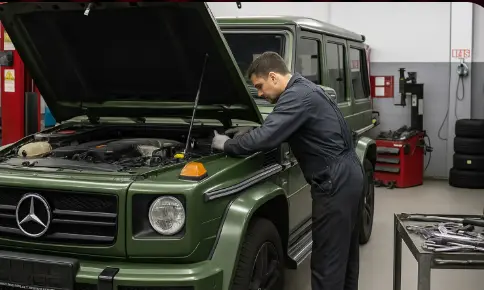
A power steering fluid leak announces itself as a reddish or amber puddle under the front of the car, a whining noise when you turn, and steering that grows heavier by the week. Left alone, the leak that started as a seep can destroy the pump and the rack, which turns a hose repair into the most expensive job in the steering system.
This guide shows you how to identify the fluid, trace the leak to its source, understand the noise, and act before the damage spreads.
How to Spot a Power Steering Fluid Leak and Identify the Fluid
Cars drip several fluids, and knowing which one is on your parking space decides how urgent the problem is. Power steering fluid is usually red, reddish brown or amber, thinner than engine oil, and slightly sweet smelling, and it appears under the front third of the car near the wheels. Lay a piece of white card under the engine bay overnight, because the colour and position of the drips point to the system responsible.
One complication is that automatic transmission fluid is also red, and on some cars the two systems even share a fluid specification. Position separates them: steering leaks sit high and forward, around the pump and along the rack line between the front wheels, while transmission leaks trail further back along the centre of the car. Smell and texture help as well, and a technician can identify a sample taken from the card on sight.
Confirm it at the reservoir. The power steering reservoir has a level marked min and max, and a level that keeps falling after topping up is a leak, not evaporation, since the system is sealed. Take note of how fast it drops: a level that falls over weeks is a seep, while a level that falls in days is an active leak that deserves immediate attention. Either way the fluid is going somewhere, and finding where is the next step.
Rack, Hoses, Pump and Cooler Lines: Where It Escapes
A hydraulic steering system holds fluid under high pressure, and it leaks from a short list of locations. Each source has its own signature, and each carries a different repair scale:
- The steering rack leaks from its end seals, showing as fluid inside the rubber bellows at each end of the rack or dripping near the inner edges of the front wheels
- The hoses leak at crimped fittings and along their length, and the high pressure hose is the usual offender because it carries the full working pressure
- The pump leaks from its shaft seal or reservoir connections, showing as wetness on and below the pump body at the front of the engine
- The cooler lines, on cars that have them, leak at their joints low in front of the radiator
Hose leaks are the most common and the most contained repair. Rack seal leaks matter more, because a wet rack often means the rack is approaching the end of its life. The position of the wetness, traced on a lift after cleaning the area, tells the technician which one you have.
The Whining Noise and Heavy Steering, Explained
The classic soundtrack of a low system is a whine or groan that rises when you turn the wheel, loudest at parking speeds and full lock. The pump makes that noise when it starts drawing air instead of fluid, and air in a hydraulic system means the level has dropped. A moan on cold mornings that fades as the car warms is the early version of the same warning.
Fluid condition tells its own story alongside the level. Healthy fluid looks bright and translucent in the reservoir, while fluid gone dark brown or smelling burnt has been overheating, which points to a pump already working past its margin. Foam or a milky look confirms air is being drawn in through a failing joint.
A glance at the colour whenever you refuel costs nothing and buys you weeks of warning. When burnt or contaminated fluid is found, the repair should include a full flush with the exact specification your marque lists, because mixing fluid types or reusing degraded fluid sends fresh seals down the same road as the old ones. Ask for the fluid specification to be written on the invoice, as with any other part.
Heavy steering causes split into two groups: loss of assistance and mechanical binding. A leak causes the first kind, arriving gradually as the level falls, and often heavier in one direction first as the rack loses pressure on one side. Binding from a worn joint feels different, more like notchiness than weight.
The dangerous stage is the end of the first path, because a pump run dry overheats, wears rapidly and fills the system with debris. That is how a neglected leak becomes power steering pump failure, and how pump debris then takes the rack with it.
Electric vs Hydraulic Systems on Modern Luxury Cars
Which steering system your car uses changes this whole conversation, so it is worth knowing before you worry. Hydraulic power steering dates back to the 1951 Chrysler Imperial, according to J.D. Power’s history of the technology, and that date matters because it explains why the industry moved on: after seven decades, carmakers replaced the pump and fluid with an electric motor, and most current models use electric assistance with no fluid at all.
The practical rule for Dubai’s car park is age based. Current generation Mercedes-Benz, BMW, Audi, Porsche and Range Rover models are electric and cannot leak steering fluid, so a red puddle under one of those is another fluid, often transmission oil, which needs its own diagnosis.
Many cars from the 2000s and early 2010s, including plenty of luxury models still driven daily here, remain fully hydraulic. Some run a hybrid electro-hydraulic setup with an electric pump feeding a hydraulic rack, which can still leak. If heavy steering appears on an electric system, the cause is electrical or mechanical rather than fluid, and it goes straight to computer diagnostics.
Telling the systems apart takes one look under the bonnet. A hydraulic or electro-hydraulic car has a fluid reservoir marked with a steering wheel symbol, and a fully hydraulic car adds a belt driven pump on the front of the engine. A fully electric system has neither, and the specifications pages of the handbook settle any doubt. If you are still unsure, send us a photo of your engine bay on WhatsApp and we will identify the system and tell you what your puddle is likely to be.
Repair Cost by Source: What Moves the Number
The cost of fixing a leak depends almost entirely on where the fluid is escaping, and the honest answer is that it always comes down to several factors. These are the ones that move the number most:
- The leak source, since a hose is a far smaller job than a rack
- The marque and model, because parts availability differs widely between a BMW and a Bentley
- Access, as some racks require subframe work to remove
- Whether secondary damage has already occurred in the pump or rack from running low
Choosing a workshop for luxury car repair in Dubai that traces the leak before quoting is what keeps the number honest. The order of those factors changes car by car, which is why the trace comes first.
That last factor is the reason early repair is the cheap repair. A hose replaced promptly protects the pump above it and the rack beyond it. The same hose ignored for months can take both with it. For a figure you can actually plan around, contact Mori Autoworks for an accurate estimate on your specific car, and the hydraulic service team will trace the leak to its source before quoting, so you pay for the repair you need and not the one a parts list guesses at.
The Damage Risk of Running Low
Driving on a low system is the most expensive habit in this story, and Dubai conditions sharpen the risk. The fluid is not just hydraulic muscle, it is also the pump’s lubrication and cooling. Summer heat thins the remaining fluid and hardens rubber seals, speed bumps and car park ramps load the rack at full lock, and stop-start traffic keeps the pump working with little airflow. A system already low has no margin left for any of that.
There is a safety edge to it as well. Assistance that fades or surges mid corner changes how the car responds exactly when you need it predictable. Steering feel is not cosmetic, and on a heavy luxury car the difference between assisted and unassisted effort at parking speed is enormous. Worn steering components also load the surrounding joints unevenly, which is why a thorough leak diagnosis includes a look at the linked components, and why suspension repair checks often go hand in hand with steering work.
Who This Suits, and When to Leave It Alone
This guide suits owners of hydraulic and electro-hydraulic cars showing any of the signs above: drips, whine, heaviness, or a falling reservoir level. It also suits buyers booking a pre-purchase inspection on a used car, because a wet rack found before purchase is a negotiating point rather than a surprise.
Leave it alone in two cases. If your car is a current model with fully electric steering, fluid leaks are not your issue, and a puddle needs a different diagnosis. And if your only symptom is a one off top up years apart with no drips and no noise, monitor rather than spend, since sealed systems can lose a trace over a long life. What should never be left alone is the combination of noise plus falling level, because that pairing means the countdown to pump damage has started.
Catching It While It Is Still a Small Job
A power steering fluid leak is one of the most fixable faults on a car when caught at the hose or seal stage, and one of the most expensive when the pump and rack have paid the price for waiting. Check the puddle, check the reservoir, and listen for the whine.
If any of the three shows up, message us on WhatsApp, call +971 50 586 5860, or email info@moriautoworks.com with your car’s marque, model and what you have noticed.
Our contact us page works just as well, and the rest of what we repair is listed under mechanical services. We will trace the leak properly on a lift and give you a written quote before any repair begins, because a small job today is the outcome everyone should want.
Frequently Asked Questions
Combine three checks: a white card under the front overnight to catch drips and show their colour, the reservoir level marked against its min line, and a listen for whine at full lock. Photograph the card and the reservoir a week apart, because the comparison gives a technician a head start.
Gradual heaviness that worsens over weeks points to falling fluid and fading assistance on a hydraulic system. Sudden heaviness after a warning light points to an electric assistance fault. Heaviness in one direction only often means the rack is losing pressure on one side, which is a rack level diagnosis.
The pump whines when air enters the fluid, which happens as the level drops below the pickup. The sound is the pump churning foam instead of solid fluid, and it doubles as a wear accelerant, since foam neither lubricates nor cools. Whine plus a low reservoir is a confirmed leak until proven otherwise.
As a short bridge to a booking, topping up with the correct fluid for your marque is far better than driving low. It is not a fix, because the fresh fluid follows the old one out. Repeated topping up also masks how fast the leak is worsening, so keep notes on the level.
It depends on the leak source, your marque’s parts availability, access to the component and whether the pump or rack has secondary damage, so quotes without inspection are guesses. Message Mori Autoworks on WhatsApp and we will trace the leak first, then give you an accurate written estimate.